Feeding your Horse - the basics of Horse Nutrition
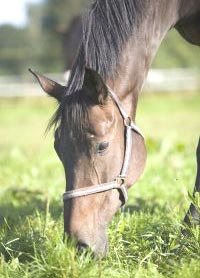 Good
Horse Nutrition and feeding are fundamental
to your horses health.
Good
Horse Nutrition and feeding are fundamental
to your horses health.
Traditionally horses and ponies
were fed on grass,
hay, oats, bran, flaked maize,and chaff,
with perhaps the addition of boiled
linseed, sugar beet or even Guinness for extra nutrition!
Today there are many choices of Horse Feed
with specialised mixes
for every type of horse from foals to
veterans.
In addition to the basic horse feeds there is a bewildering
choice of equine supplements and nutrition for horses
which claim to cure every problem from
calming excitable horses to increasing your horse or pony's
joint
flexibilty.
When feeding horses and ponies it is
important to remember that they have delicate digestive systems, and the
most natural food for a horse is good quality pasture. Horses are grazing
animals with small stomachs designed to process small amounts of food
almost continuously.
Forage feed (grass and hay) is necessary for the proper functioning
of their digestive system as it is the horse's most natural
diet.
A horse or pony usually consumes about
2% or more of their body weight in horse feed each day although amount
of food your horse needs varies according to activity, age, breed, weather,
quality of feed, quality of shelter,
condition of teeth, etc.
Horses also need lots of drinking water and an adequate
amount of salt and minerals.
When feeding ponies follow the same rules as for feeding
horses.
Feeding horses
- traditional horse feeds
- Forage feed - This includes grass and
hay and is necessary
for the horse's digestion. Forage feed should make up at
least half of a horse's daily intake of food, preferably
more.
- Oats - are nutritious and easily digested
if fed in crushed, rolled or cooked form. Oats are a high
energy, or "heating", food and the feeding of oats can cause
excitability in some horses and ponies.
- Bran - is easily digested and provides
bulk. It can be fed as a
bran mash.
- Chaff - adds bulk to food and prevents
the horse from bolting down its food too fast.
- Molichaff or Mollichop -
is a mixture of chaff and molasses, the molasses makes it
the chaff more appetising.
- Barley - If fed whole it should be boiled
or soaked for at least 2 hours before feeding as it swells
when wet. This is done to prevent it swelling once in the
horse's stomach, causing problems. It is better fed dry
if rolled and crushed first. Highly nutritious it is good
for a horse or pony in poor condition or during winter.
- Linseed - Is poisonous raw and must be
cooked first making a Linseed Jelly.
It is a food high in protein and only a handful should be
fed with a feed. It is useful for horses or ponies over
the winter as it helps maintain condition and can aid fattening.
It also promotes a shiny coat.
- Flaked Maize - should be flaked and cooked
to make it easier to digest. It is useful for fattening
a horse or pony but should not be fed to horses doing strenuous
exercise as it stays in the stomach for a long time. It
is also a high energy food.
- Root Vegetables -
carrots, turnips, swedes, beetroot and parsnips
can be fed in small quantities. These should be cut into
strips, rather than round pieces as these can become lodged
in the throat.
A swede can be hung in the stable to keep the horse amused.
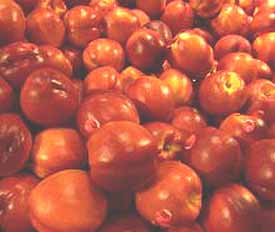
- Apples - Most horses love apples. These
should be fresh and cut into strips to avoid choking
-
Garlic
 |
|
Horse and Pony
Nuts, Cubes or Mixes
These are specially prepared mixes comprising many of the
basic feeds and there are different types designed to meet
the nutritional needs of a varied selection of horses and
ponies with differing exercising routines.
They are extremely useful as they are convenient, ensure
a good balance of all foods and
nutrients are
provided and avoid the need to store several different types
of feed. |
Feed Supplements
for Horses
Many specialised equine feed supplements
are available to enhance the regular feeding regime, and it
is common practice to add 'extras' in the form of minerals
and vitamins to the diet.
Under normal circumstances, if your horse is fed recommended
levels of a concentrate applicable to his current work level,
he will not require any supplements.
Most modern mixes contain a balanced level of minerals and
supplements.
There are, however, certain times when a supplement is recommended:
- When the horse is on a diet and fed only
small amounts.
- When the horse is grazing on poor quality grass and receives
no concentrates.
- When a horse is working hard yet due to excitablilty is
receiving a lower energy concentrate than recommended.
- When the horse is on box rest and recuperating from an
illness.
- For problems such as poor hoof quality.
- For
joint problems.
- As an anti-inflammatory - eg
Devil's Claw.
- As a calming
agent for excitable horses or moody mares!
- Where
there are low levels of (for instance) selenium
or copper
in the soil,
- When
electrolytes are required due to high level of
work.
All minerals and vitamins are inter-linked in the way they
work and the addition of one mineral may well affect the absorption
rate of another.
An example would be high levels of phosphorus will adversely
affect calcium absorption, even if the rate of calcium intake
is at the recommended level.
So care must be taken when deciding to introduce a feed
supplement |
More
Horse Nutrition articles
Omega
3 Oils
Seaweed
supplements
Equine
Joint Supplements
Electrolytes
for horses
Feeding Probiotics to horses |
UK
Horse feed suppliers
Berkshire
Cambridgeshire
Cornwall
Derbyshire
Devon
Dorset
Essex
Hampshire
Kent Middlesex
Norfolk
Somerset
Suffolk
Surrey
Sussex
|
|
Article: Equine nutrition - advice on feeding horse and ponies