Choosing The Right Bedding for your Horse or Pony
 The choice of bedding for a stabled horse
used to be just a matter of choosing beween straw and
wood shavings.
The choice of bedding for a stabled horse
used to be just a matter of choosing beween straw and
wood shavings.
Today there is a much wider choice, with the options to bed your horse
on rubber matting or flooring, shredded paper and cardboard,
Flax, hemp and rapeseed based equine bedding as well as many types of
woodshavings specially manufactured for horse bedding.
Many dust-extracted bedding materials are available
which have also been treated with non-toxic disinfectants for added equine
hygiene.
The choice of bedding should be based on your horse's and
your own needs, taking the following points and advice into consideration.
- Affordability - how much do you want to spend? Some products may appear
expensive initially but in the long term you may save money. Calculate
how much it will initially cost to fill the stable,
then consider how much bedding you will need add daily
to maintain the bed.
- Consider any health problems that your horse may
suffer from, especially
respiratory problems, there are dust free products especially shavings
and hemp that have developed specially for horses that can suffer from
the dust present in straw beds. Your
vet may be able to give you the most up to date advice on bedding materials
suitable for horses with health problems.
- If your horse eats his bed it may be worth looking
for a bedding material that has been treated with a
non-toxic subtance to give it a bitter taste and make it unpalatable.
- Consider how you will dispose of the soiled bedding. Select a type
that you know you can dispose of easily. You make need to take advice
from your local authority.
- How draughty or cold is your stable? A deep straw bed
with high banks will provide extra warmth and block out draughts. Some
brands of equine rubber matting offer thermal insulation.
- If your horses require extra protection from injury whilst stabled,
mares in foal or with foals at foot for example, rubber
matting and rubber wall mats can give added
protection.
- Horse feed suppliers often sell many different types
and brands of horse bedding which may be bought in
small or large quantities - Buying in bulk for large yards can significantly
reduce costs.
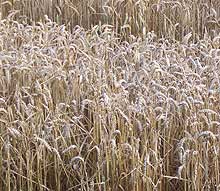
STRAW
Straw is the traditional bedding
for horses, with wheat straw being
the most suitable. Oat and barley straw should not be used
for equine bedding.
Straw is relatively cheap, fairly easy to dispose of and
looks warm, cosy and comfortable.
Its drawbacks are that it is notoriously dusty and some horses
will eat straw beds and this can result in
respiratory
problems and weight gain.
Dusty straw in the stable can also cause respiratory diseases
such as SPAOD.
A deep-litter can be a very economical,
money saving system, but can be very heavy, smelly and unpleasant
to muck out.
Straw can often be bought locally from a farmer, who will
usually deliver direct to the stableyard. |
RUBBER
MATTING
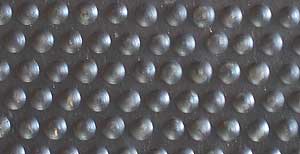
Rubber matting provides good support and
grip for a horse's limbs and feet. As it covers the whole
stable floor the risk of injury to your horse
or pony from falls or slipping is reduced
It is supplied in separate mats that can be cut to size
(some rubber mats interlock) or in a liquid
that once it has set is forms a seamless sealed floor that
does need to be lifted out for cleaning.
Rubber matting is usually used under another
bedding material such as straw or shavings, the small amount
of bedding material on top of the rubber mats
helps to soak up urine and control the spread of droppings.
Some horse owners choose to use rubber matting
without any bedding on top. However, this can lead to wet
smally floors, dirty horses and wet stained, rugs.
High hygiene standards need to be maintained
when using rubber mats which need need to be cleaned, especially
underneath, to prevent the build up of ammonia. Effective
stable drainage is essential for this system.
Although the initial costs of the matting are realtively
high, this is offset by the fact that the amount of bedding
used daily can be greatly reduced, this saves time mucking
out and reduces muckheap size. |
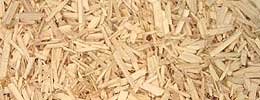 |
Paper
Shredded Paper is a dust free alternative
bedding material, usually made from recycled newspapers and
supplied polythene wrapped for easy storage.
The paper is cut into short flakes or long strips. The long
strips of paper tend to be harder to muck out as they clump
together and it is harder to separate out the droppings in
the stable. When wet a paper bed can become very soggy.
A large number of bales may be needed to create a thick bed.
Being made from newsprint the ink on the paper can stain
a horse or pony's coat.
Shredded paper is easy to dispose of as it breaks down more
quickly than other bedding.
It can be hard to keep tidy as it easily blows around a
stableyard. |
|
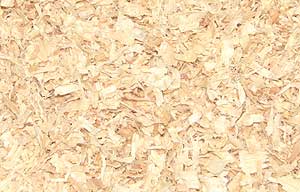 |
Wood
Shavings
Wood shavings are more absorbent than straw
and dust-extracted products are manufactured especially for
use as horse bedding - which is useful if your horse suffers
form any respiratory
diseases.
However these specially produced shavings can be expensive.
Generally horses and ponies do not eat woodshavings,
which can save you money whilst helping to control the horses
diet.
Shavings have become popular type of horse bedding as they
are easy to muck out and very absorbent . They can be successfully
used for a deep litter bed .
It takes about 4-5 bales of shavings to start a bed, followed
by 1 or 2 bales a week to maintain a good bed.
If you do get shavings not specially manufactured
for horses, such as waste shavings produced as a
from a wood yard or saw mill, you may find that the woodshavings
are sharp, contain rubbish and may be dusty.
Disposal of shavings waste can be a problem - they take a
long time to rot and are often unwelcome on stable yard muckheaps.
The easiest method of disposal is by burning - but many areas
have restrictions on this - check with your local authority.
|
Flax,
Hemp and Rapeseed
Hemp, Flax and Rapeseed
are relatively new types of bedding. These bedding materials
- such as Aubiose
- are manufactured from the chopped stems of the plants.
Horse owners who have used this new type
of bedding have reported that these beds are cleaner and easier
to muck out than shavings.
Hemp, Flax and Rapeseed
bedding has good absorbency, and provides a soft bed with
a low dust content.
Some horses do try to eat this bedding and this can cause
swelling in the stomach as the bedding is somewhat indigestible.
This is another bedding material which can be initially expensive
than straw or shavings,
but in the long term can work out to be fairly cost effective
as less has to be replaced each day.
An advantage is that Hemp, Flax and Rapeseed
rots down quickly which makes disposal easier. |
Cardboard
Shredded cardboard is a newer bedding material
which is becoming a popular choice amongst horse owners and
equestrian facilities.
Cardboard has good insulation qualities, is absorbent, dust
free, horses stay cleaner than on other types
of bedding and it is easy to store and to muck out.
Like paper, cardboard can clump together in the stable,
which although makes removing wet patches easier and make
droppings harder to remove. |
Peat
Peat Moss used to be a popular choice of
bedding, but is seldom used today.
It is expensive and difficult to obtain.
Most importantly it is comes from an unrenewable natural
source and much natural habitat has been destroyed in its
collection for commercial use. |
|
Advice on the choice of equine bedding for a stabled horse
- options of choosing straw,
shavings, rubber matting, aubiose, shredded paper and cardboard, Flax, hemp
or
rapeseed based beds for stables