Haylage - benefits of feeding to horses and ponies
 Haylage is an ideal replacement for hay
and excellent for feeding to horses with dust allergies
and equine
respiratory problems such
as COPD, SPAOD and RAOD.
Haylage is an ideal replacement for hay
and excellent for feeding to horses with dust allergies
and equine
respiratory problems such
as COPD, SPAOD and RAOD.
Haylages are made of grass that is cut before it goes to seed. It is semi-wilted grass sealed in a bag but without the dust and spores found in hay.
The benefits of this are that as there are no spores it does not cause or aggravate respiratory problems. Haylage also has a higher nutritional value than hay.
This is acheived by cutting good quality grass - but instead of allowing it to dry completely it is baled when the grass has wilted and the moisture content reduced to about 40 - 45%.
Although haylage will not usually contain dust or mould spores the moisture content will prevent any remaining mould spores becoming airborne - reducing the chance of respiratory problems.
The process of making haylage for horses takes about 24 hours in good drying weather - hay takes 4 - 5 days.
The bales are then compressed to half their original size, packed and heat sealed into plastic bags.
Natural fermentation inside the bag preserves the grass as haylage - which retains 90% of the feed value of fresh grass.
DIFFERENT TYPES OF HAYLAGE
Haylage can come in several forms to suit all types of horses and ponies - ryegrass, high fibre, alfalfa, sainfoin plus special mixes for racehorses and competition horses.
Cost is a factor which may discourage some horse owners from feeding haylage - but you may not need to feed as much haylage to your horse or pony as ordinary hay as haylage has a much higher nutritional value - as a result less hard feed may be needed as well - an additional saving.
Once opened the contents of a bale of haylage should be used as soon as possible as exposure to air gives the chance for mould to develop. A bale will usually keep for 7 days once it has been opened.
Sometimes when you open a bale of haylage you will see small white or cream round groups of yeasts on the haylage stems and blades that have a creamy consistency - not fluffy or powdery . These "colonies" are not moulds and do not produce spores - they will not harm the health of your horse or pony.
If you make the change from hay to haylage make the change gradual - a horse is very sensitive to any changes in his diet.
HOW MUCH HAYLAGE SHOULD YOU FEED TO A HORSE OR PONY?
If you are used to feeding you'll need to get used to handling haylage - you don't want to end up under or overfeeding your horse or pony.
A typical 500 kilo, 16hh middleweight riding horse needs a minimum daily intake of roughage of about 1% of his body weight - this works out to 5 kilos of hay.
As haylage has a higher moisture content, the same riding horse would need a daily ration of 7 to 8.5 kilos of haylage.
Although you need to feed more haylage by weight, you need less by volume - haylage is much denser than hay because of the higher moisture content, .
When you start out feeding haylage to your horse it's best to weigh out the amount every day - until you get accustomed to estimating the volume.
As haylage has about a 10% higher nutritional value than hay less supplementary hard feed will be required to meet a horse or pony's energy requirements.
|
|
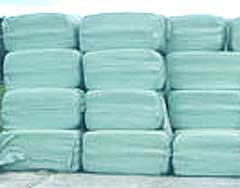
UK Horse feed suppliers
Berkshire Cambridgeshire Cornwall Derbyshire Devon Dorset Essex Hampshire Kent Middlesex Norfolk Somerset Suffolk Surrey SussexHORSE CARE ADVICE AND EQUESTRIAN ARTICLES
Feeding Foals | Seaweed | Hoof care | Copper Deficiency | Angleberry | Magnesium |Garlic | Ragwort | Horse and Hound | Horse Bedding | Insurance | Cushings | Bot Eggs | Equine Body Work | Devil's Claw | Windgalls | Bran mash | Hydrotherapy | Mud fever | Sarcoids | Iridology | Aubiose | Colic | Vegetables | Calming Herbs | Buying a Trailer | Selenium | Nosebleeds | Sticky Stifle | Headshaking | Liver disease | Veteran Horse |
Advice about the amount and benefits if feeding haylage to a horse or pony