Advice about soaking hay for horses to reduce dust allergies
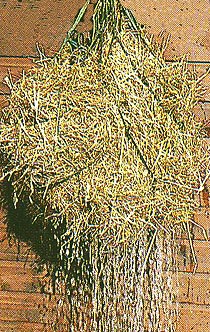 Soaking
hay is the the most common method used to reduce dust
and spores in a horse's environment.
Soaking
hay is the the most common method used to reduce dust
and spores in a horse's environment.
Dust and spores in hay and around the stable can cause and worsen equine respiratory problems and diseases in horses and ponies.
Suprisingly little research has been been done on the benefits or effects that soaking hay actually has. But it is widely believed that soaking acts to stick the dust particles and spores to the stems of the hay due to water surface tension.
This ensures that the horse eats the particles rather than inhales them so causing no harm to the horse or pony.
There is much confusion over how long hay should be soaked for before it is fed to a horse or pony.
The general advice about soaking hay is that short soaking times are the best - as long as the hay is thoroughly wet through.
A 5 minute soak has been found to reduce the number of particles released from hay by 97% - while a 24 hour soaking resulted in a 99% reduction, but with a big loss in equine nutritional values.
However as the hay dries out the effect of the soaking disappears and the dust content returns to normal.
How to soak hay to feed to a horse or pony
Hay should always be soaked in clean water - a tank or bath is suitable for this. The hay is best put into a haynet first before feeding to your horse.
The haynet should be completely immersed in the water - you can use a weight to hold it down
After soaking in a tank or bath of clean water the haynet should be hung up to let the excess water drain away.
Do NOT reuse the water used to soak hay - it now contains pollutants similar to sewage water.
Nutritional effects of soaking hay for horses
Research has suggested that the level of protein in hay is reduced by soaking.
Also carbohydrate levels are affected by soaking as the sugars are water soluble and "washed out" during the soaking and draining process.
Hay that has been soaked for six hours or more also shows significant losses of nutrients, minerals and trace elements.
In particular phosphorus, potassium, magnesium, sodium, copper, and zinc.
This loss of nutrients could have a significant effect on a horse or pony if his diet is mainly made up of hay.
Soaking hay - water pollution
Waste water produced from soaking and draining hay is now classified as effluent by many water authorities.
This water is a pollutant and should not be poured down the drain.
Large equestrian centres and riding schools may find this to be a big problem in the future as tighter controls are made re disposing of waste water.
Alternatives to soaking hay
Steaming hay is a good alternative to soaking hay. Many equestrian centres and livery yards now use this method of reducing dust in hay. There is less loss of nutrients than soaking, very little waste water and the hay doesn't freeze in winter - which can happen with soaking!
If your hay is of such a poor quality that it needs to be soaked, or you horse or pony has a respiratory disease - it is probably better not to feed hay. A good alternative is to feed haylage
UK Horse feed suppliers
Berkshire Cambridgeshire Cornwall Derbyshire Devon Dorset Essex Hampshire Kent Middlesex Norfolk Somerset Suffolk Surrey SussexHORSE CARE ADVICE AND EQUESTRIAN ARTICLES
Seaweed | Feeding Foals | Bran mash | Hoof care | Angleberry | Magnesium |Garlic | Ragwort | Horse and Hound | Liver disease | Glucosamine | Insurance | Mud fever | Cushings | Bot Eggs | Equine Body Work | Devil's Claw | Windgalls | Hydrotherapy | Sarcoids | Iridology | Colic | Aubiose | Vegetables | Calming Herbs | Buying a Trailer | Selenium | Nosebleed | Sticky Stifle | Headshaking | Veteran Horse | Copper Deficiency |
Advice about soaking hay for a horse or pony to reduce dust allergies caused by hay