Thrush in Horses - Causes, Symptoms and Treatment
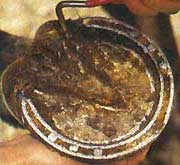
Keep feet clean to prevent
thrush
Equine Thrush is a bacterial or fungal infection of the horse's frog and heel bulbs of the horse's foot.
Thrush affects the central and lateral clefts of the frog and the bulbs of the heel and is characterised by the presence of dead, black, foul smelling material in the affected areas.
The infection may penetrate the horny and sensitive structures of the horse or pony's foot.
An infection of thrush can be painful and cause your horse to go lame.
This unpleasant condition of a horse's hoof can be prevented and treated by good stable management and good hoof care from your farrier.
CAUSES OF THRUSH IN A HORSE'S FOOT
The main causes of thrush are:
- Unhygienic conditions - eg horses standing for long periods on soiled bedding.
- Feet not kept clean.
- Lack of frog pressure resulting in poor blood circulation and limited horn production
- Feet becoming too soft - allowing foreign bodies to penetrate the foot
- Neglect by the farrier - poor shoeing or trimming
- Poor foot conformation
Many organisms are involved, but the bacterial microbe Spherophorus Necrophorus is the most important as the bacteria thrive in conditions deprived of fresh air.
SIGNS AND SYMPTOMS OF THRUSH
The most obvious sign of thrush is a foul smell which is noticeable when you pick out your horse's feet.
There is also an increased amount of moisture and a black discharge in the clefts of the frog.
If a horse has thrush the clefts of the foot tend to become deeper than normal and may even extend to to the sensitive tissue - causing the horse to flinch as you pick out and clean his feet.
In some cases of thrush the horse will be lame
HOW TO TREAT EQUINE THRUSH
A horse or pony with Thrush needs to be treated by a routine of cleanliness so that the frog and hoof can heal and return to normal.
The frog should be pared by your farrier to remove any damaged tissue
The feet should be cleaned daily and the clefts of the foot packed with medication. There are several things that can used including : iodine, peroxide (which should be diluted), eucalyptus oil, copper sulphate and commercially developed solutions.
Honey has has proved successful in treating thrush - it has natural antibiotic properties and doesn't sting the horse - and is easy to apply from a "squeezy" bottle.
SHOEING A HORSE THAT HAS THRUSH
In shoeing a horse with thrush the emphasis is to produce frog pressure by lowering the heels - but not at the expense of too much strain being applied to the flexor tendons
Where there is persistentlameness a bar shoe is recommended to give protection to the hoof and heel of the horse.
HORSE CARE ADVICE AND EQUESTRIAN ARTICLES
Bog Spavin | Devil's Claw | Cold Back | Redworm | Bran mash | Cushings | Herbs for Veterans | Hydrotherapy | Clivers | Feed Balancers | Bedding | Equine Body Work | Iridology | Arthritis Supplements for Horses | Ringworm | Aubiose | Colic | Carrots | Calming Herbs | Bot Eggs | Nosebleeds | Magnotherapy for horses | Mare in Foal | Feeding Foals | Bit Fitting | Probiotics | Selenium | Magnesium | Pelham | Soaking Hay | Headshaking | Ragwort | Windsucking | B vitamins | Omega 3 oils | Grakle Noseband | Hackamore | Hay Steamer | Worming | Loose Stools | Hoof care | Glucosamine horses | Horse Feed Dorset | Cracked Heels | Biotin | Bit Fitting | Omega 3 | Pelham | Probiotics
Thrush in Horses - Causes, Symptoms and Treatment