How to Treat Ringworm with Equine Homeopathic Remedies
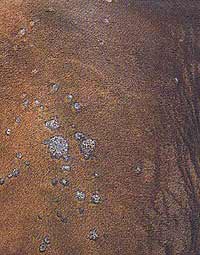 Ringworm is an equine skin disease or fungal dermatitis
recognised by circular areas of hair loss with crusting of the skin which can benefit
with treatment by
Homeopathy
Ringworm is an equine skin disease or fungal dermatitis
recognised by circular areas of hair loss with crusting of the skin which can benefit
with treatment by
Homeopathy
Ringworm is not a worm but is a contagious fungal infection of a horse or pony's skin caused by different types of fungi - either the Microsporum or Trichophyton species.
A horse with ringworm can pass the infection on to humans.
Ringworm is spread by contact between infected horses or , or, more commonly, by sharing contaminated tack, grooming kit or rugs.
Infection is very slow to appear and it may take several weeks before the signs of ringworm are visible.
Homeopathic Remedies for Treating Ringworm in Horses
There are several homeopathy remedies worth trying, which have been known to clear up or cure ringworm:
Homeopathic Bacillinum
This is a general remedy for treating ringworm in horses which is useful for clearing
up the rough, dry skin which accompanies ringworm. A dose of 200c once a week is
recommended
Sepia
Sepia is a homeopathic remedy suited to treat mares with ringworm - especially if
the outbreak is related to the oestrous-cycle. A dose of 30c is usually prescribed.
Tellurium
Tellurium is the remedy to choose where the horse or pony's head is affected, and
benefits a horse that is sensitive to touch in the areas infected by ringworm. Dose
with 30c
Berberis and Chrysarobinum are other homeopathic medicines also used to treat ringworm
The effectiveness of any remedy may vary depending on what the cause or type of ringworm is affecting the horse.
General Advice on How to Manage and Treat a Horse with Ringworm
A horse or pony infected with ringworm should be isolated from other horses whilst being treated.
Any brushes used to groom the horse or pony should be thoroughly disinfected after each use.
Clipping long hair around the infected area and scrubbing with a mild soap and water can assist treatment of ringworm.
Once the horse is free of any symptoms or signs of ringworm, disinfect any equipment and tools used during treatment.
Remember that ringworm can be passed to humans - so take care to protect yourself
while caring for your horse.
HORSE CARE ARTICLES AND EQUINE ADVICE
Haylage | Hay Steamers | Salt | Glucosamine for horses | Secondhand Saddlery | Selenium | B vitamins | Biotin | Pelham Bit | Probiotics | Grakle Noseband | Hackamore | Arthritis Supplements for Horses | White Line Disease | Sweet Iron Bit | Liver Problems | Loose Stools | Veteran Horses | Feed Balancers | Electrolytes | Sheath Cleaning | Hydrotherapy for a horse | Eye problems | Worming program | Clivers | Companions for horses | Biotin | Bit Fitting | Bot Eggs | Hoof care for horse | Laminitis | Probiotics |
Articular or non-articular Ringbone - bony swelling in the pastern region of the horse's
leg causing lameness. Advice on symptoms and treatment with homeopathy and
homeopathic remedies and medicines for a horse or pony