Sweet Itch - Causes, Symptoms and How To Treat
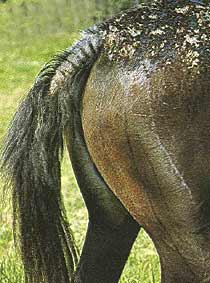
Photo of a horse with a bad
case of sweet itch
Sweet itch is an equine skin condition which, although not serious, causes the horse or pony intense irritation.
Sweet itch is also referred to as "Summer Seasonal Recurrent Dermatitis".
It is caused by an allergic reaction to the saliva of a species of midge called Culicoides
SYMPTOMS OF SWEET ITCH IN A HORSE
The symptoms of sweet itch on a horse usually only occur during the summer months.
The horse or pony will constantly rub himself - causing hair loss and thickening and inflammation of the skin in the affected areas, usually the mane, hindquarters and tail.
The horse or pony's skin eventually becomes chronically thickened, wrinkled and blackened - see photo.
During the winter months, with no midges about, the sweet itch may disappear and the sore ares heal
CAUSES OF SWEET ITCH IN HORSES AND PONIES
Sweet itch in horses is an allergic dermatitis caused by an allergy to the saliva of small midges called Culicoides.
Some horses are much more susceptible to sweet itch than others, and the condition can be hereditary.
TREATMENT OF SWEET ITCH IN A HORSE OR PONY
In the case of sweet itch prevention is easier than cure.
A horse or pony with sweet itch should be kept stabled on days when midges are more likely to be about, especially at dawn and dusk.
Fly repellents can help towards keeping away midges and gnats - but if you do turn your horse out put on a fly sheet or rug with a hood which covers him from head to toe and which covers the belly as well for extra protection.
Baby oil applied to the root of the mane and tail can stop the midges getting a grip to feed.
Treatment with corticosteroid creams, ointments or injections can help to reduce the inflammation in the skin.
Anti-histamines, such as benadryl, do not work as well as a treatment on horses as on humans and are best avoided.
Some horse owners have reported success treatment by adding garlic or cider vinegar to the horses feed.
A horse that has been fed garlic gives off an odour which repels the midges!
HORSE CARE ADVICE AND EQUESTRIAN ARTICLES
Selenium Supplements | Probiotics for horses | B vitamins Horse | Angleberry| White Line Disease | Devil's Claw | Arthritis Supplements Horses | Horse Redworm | Herbs for Veterans | Hydrotherapy | Moody Mare Supplement | Horse Feed Balancers | Sarcoids | Horse bedding advice | Saddle Fitting | Equine Body Work | Iridology | Aubiose | Colic | Equine Liver disease | Calming Herbs | Buying Trailer | Bot Eggs | Soaking Hay | Hay Steamers | Horse Nosebleeds | Sticky Stifle | Strangles Symptoms |Sweet Iron Bit | Ragwort | Mare in Foal | Feeding Foals | Horse Worming | Magnesium | Pelham | Farriers in Kent | Contracted Tendons Foals | Diarrhea horses | Electrolytes |
Sweet Itch - Causes, Symptoms and How To Treat sweetitch in a Horse or Pony