Equine Body Work & Sports Massage
Equine Body Work is a hand-on form of complementary therapy that treats the whole horse, not just the bit that hurts.
It is suitable for all horses and ponies, regardless of age, breed or training.
Equine Body Work can be used to treat and prevent injuries, to maintain a
healthy working physique and to find that extra inch in competition horses.
Wiltshire and surrounding counties covered.
Vera Brimacombe EBW
Tel. 07527 804445
www.suppleequine.co.uk
Equine Massage Therapy for Horses And Ponies
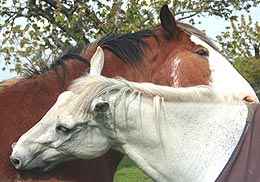 Massage
is a centuries old therapy for horses. Its use can free
up tight muscle tissue, enhance blood circulation, improve muscle tone
and relax and calm the horse.
Massage
is a centuries old therapy for horses. Its use can free
up tight muscle tissue, enhance blood circulation, improve muscle tone
and relax and calm the horse.
For horses involved in competition, equine massage therapy can boost performance by improving range of movement and stamina, because you are improving muscle quality and circulation.
The ultimate goal of equine massage therapy for your horse is to restore freedom to each muscle group.
Tight Contracted Muscles in Horses can be improved my massage
When a horse's muscles become tight or in a contracted state this puts pressure on surrounding tissues.
This results in a decrease in blood circulation, restricted movement and pain. If not relieved and loosened this muscle tightness can cause more problems and will continue to worsen.
More than 60% of the horse's body weight is muscle and muscular problems can be
a source of a variety of problems and training set-backs.
Other equine massage techniques include direct pressure in varying intensity to relieve a spasm, shaking to increase circulation, and vibration to get to the deeper muscle structures and equine joints.
Nerve manipulation such as stretching and pressure is used for nerve maintenance and therapy, and friction helps to break down scar tissue over the horse's muscle fibres.
Whilst they are working equine massage therapists are looking out for problems in the horse that can be indicated by tenderness in certain areas, body temperature, tension, feel of the skin and muscle fibres.
Technical training is required to learn and understand equine anatomy and the physics of motion.
Prompt attention to minor muscle injuries not only improves a horse's performance but may also prevent major problems in the future.
Massage is an excellent, drug free non-invasive treatment that can have fast results. A specialised foem of massage is Equine Body Work
There are several massage movements, which can be used in a combined treatment, and have great effect on the horse's skin, muscles, blood vessels, lymphatic system and nerves.
 One
of the basic massage techniques used on horses is stroking,
which is intended to affect the central nervous system by soothing the
horse.
One
of the basic massage techniques used on horses is stroking,
which is intended to affect the central nervous system by soothing the
horse.
Equine massage therapists may also use hand held massagers or pads and massage machines such as the Equissage equipment from Niagara Healthcare developed for use on horses.
These are available for purchase by individuals and can be used to great effect, but be sure to get a good demonstration on how to use these equine massage machines before you buy!
|
|
HORSE CARE ADVICE AND EQUESTRIAN ARTICLES
Garlic | Horse and Hound | Diarrhea in horses | Ragwort | Horse Bedding | Hoof care | Horse Insurance | Angleberry | Equine Body Work | Devil's Claw | Bran mash | Hydrotherapy | Mud fever | Sarcoids | White Line Disease | Iridology | Aubiose | Vegetables | Liver disease | Calming Herbs | Buying a Trailer | Bot Eggs | Selenium | Horse Nosebleeds | Sticky Stifle | Headshaking | Horse Filled Legs Treatment | Arthritis Supplements Horses | Contracted Tendons in Foals | Horse Feed Bedfordshire | Sheath Cleaning | Hay Steamers | Melanoma in horses | Weak Hoof Treatment |
Equine Massage Therapy for a Horse or Pony, massage to relax horses muscles.